
 11
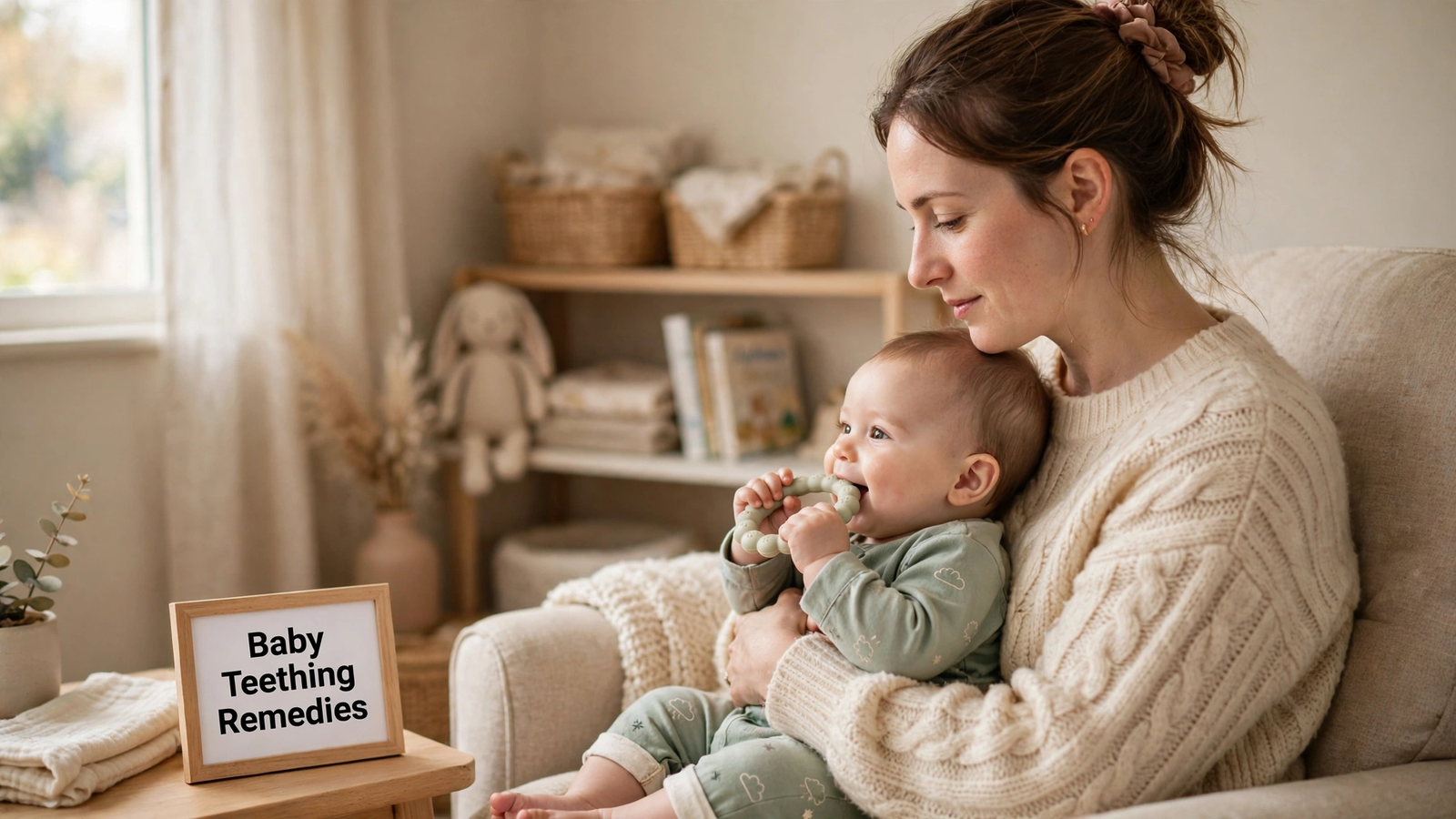
The safest baby teething remedies are simple: rub your little one’s gums with a clean finger, offer a chilled (never frozen) teething ring, or let them Gnaw a cold, damp washcloth. On rough nights, ask your pediatrician about pain relief. Skip numbing gels, homeopathic tablets, and teething necklaces; they’re risky.
Teething is the stretch of early childhood when the 20 primary teeth push up through the gums, leaving the gum over each rising tooth swollen and tender for a few days.
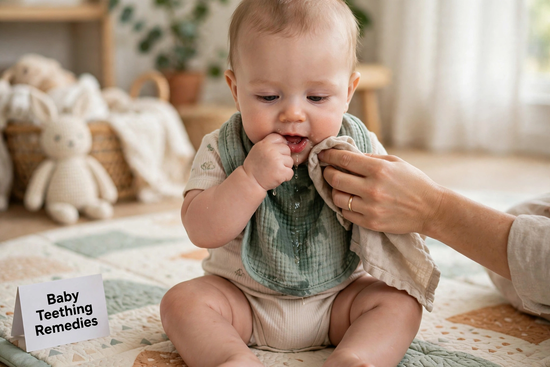
Watch for heavy drooling, chewing on fists or toys, red or puffy gums, extra crankiness, and restless nights. These signs usually appear a few days before a tooth pokes through, then ease once it’s out.

The safest baby teething remedies work through pressure and cold: a clean finger, a chilled solid teether, or a cold washcloth. Medicine is a backup for the occasional bad night, not a daily habit.
Wash your hands, then press slow, firm circles over the swollen spot for a minute or two. Counter-pressure dulls the ache, and your baby’s hardest bite marks the rising tooth.
Refrigerator cold is the target. A freezer makes rubber and fabric stiff enough to bruise gums, and frozen liquid-filled rings can crack and leak.
Use this rotation so a cold teether is ready at 2 a.m.:
A twisted, damp washcloth chilled in the fridge makes a free fourth option. If you’d rather not buy three rings at once, the teether giveaways at Look What Mom Found often include multi-pack sets that fit this rotation. Run each piece through the four-point safety check below before it goes in the fridge.
Acetaminophen works for an occasional sleepless night, and ibuprofen is only for babies 6 months and older. Get a weight-based dose in milliliters from your pediatrician.
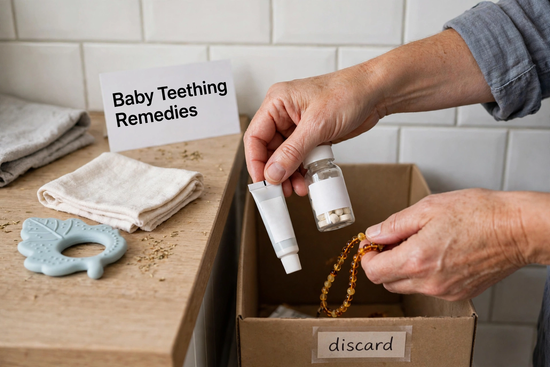
Avoid numbing gels, homeopathic teething tablets, and anything worn as jewelry. Each carries a documented hazard that outweighs brief comfort.
In its 2018 Drug Safety Communication, the U.S. Food and Drug Administration said it has received more than 400 reports of benzocaine-linked methemoglobinemia since 1971. In a closer review of 119 cases from 2009 to 2017, 11 involved children under 2.
That blood disorder starves tissue of oxygen and turns lips gray or blue. Check every gel and spray in your cabinet, and discard anything with benzocaine or lidocaine bought for teething.
Homeopathic tablets fail for a different reason: some batches held more belladonna, a toxic plant extract, than their labels listed.
| Product | Verdict | Key figure | Source |
| Benzocaine gels and sprays | Avoid under age 2 | 400+ methemoglobinemia reports since 1971 | FDA, 2018 |
| Amber, wood, or silicone teething jewelry | Avoid | One reported strangulation death of an 18-month-old | FDA, 2018 |
| Pull-string silicone teethers (Yetonamr) | Recalled | Sold on Amazon June–Oct 2025, $10–$16 | CPSC Recall 26-204 |
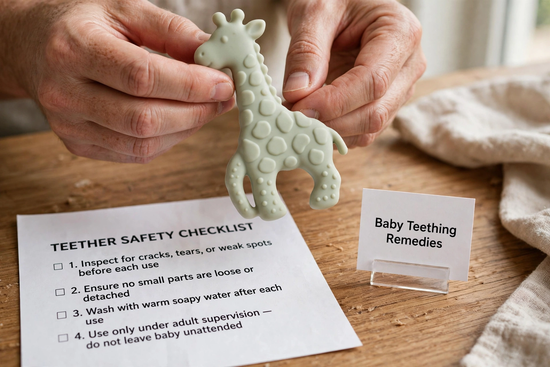
A teether can be made from safe material and still fail because of its shape. In January 2026, the U.S. Consumer Product Safety Commission recalled a pull-string teething toy after 32 choking incidents because its silicone strings fell short of the size required under federal toy safety rules.
Strings and dangling beads can slide to the back of a baby’s throat. Run this four-point check before buying:
Save this checklist, or bookmark the teether picks at lookwhatmomfound.com so you can rerun it whenever a new recall hits the news.
Teething runs from about 6 months to age 3, in short bursts rather than one long ordeal. According to the American Academy of Pediatrics, a baby’s first tooth typically shows up near 6 months, and most children have every baby tooth by age 3.
Twenty teeth across about 30 months averages one new tooth every six to seven weeks.
Teeth often erupt in pairs, so expect about 10 eruption episodes. If each brings four sore days, as a rough estimate, that totals around 40 rough days. out of roughly 900, under 5% of the teething window.
Plan relief around flare-ups. Three straight miserable weeks usually signal something besides a tooth.
Dental Care Milestones
| Milestone | When | Source |
| Fluoride toothpaste (rice-grain smear, twice daily) | From the first tooth | AAP, HealthyChildren.org |
| First dental visit | By the first birthday | AAP, HealthyChildren.org |
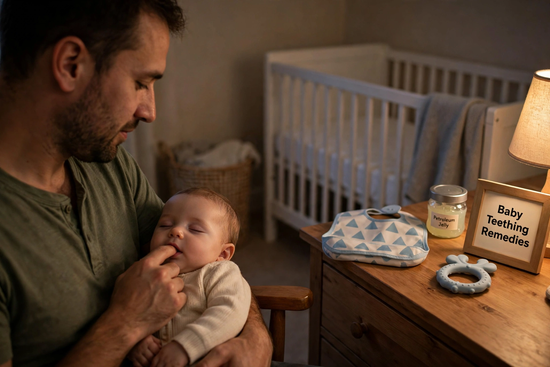
Keep the bedtime routine steady, soothe gums before lights-out, and protect skin from drool.
Offer gum massage or a chilled ring during the wind-down, then take it away before your baby goes into the crib. Safe-sleep rules still apply, so teethers and washcloths stay out of the crib.
Constant drool leaves the chin red and chapped. Pat it dry instead of rubbing, and smooth on a thin layer of petroleum jelly before naps and bedtime.
Choose bibs with a waterproof backing so moisture stays off the neck. You can find these at most baby stores, and lookwhatmomfound,regularly features drool bib bundles in its giveaways. Call the pediatrician if the rash cracks, oozes, or spreads past the chin.
Teething causes drooling, chewing, puffy gums, and mild crankiness. It does not cause a fever of 100.4°F or higher, vomiting, diarrhea, or a body-wide rash.
The common mistake is blaming every fussy week on teeth. Teething overlaps with first colds and ear infections, so the timing looks convincing.
The fix: take a rectal temperature when your baby seems unusually unhappy, and call the pediatrician for 100.4°F or higher, refusal to drink, or fewer wet diapers.
Babies under 6 months and preemies follow different rules. Ibuprofen is off the table before 6 months, and preemies tend to teethe by adjusted age, so a toothless 7-month-old born two months early is usually on track.
No, fully frozen teething rings are too hard for tender gums. Chill solid rings in the refrigerator instead.
Yes, acetaminophen is acceptable for an occasional rough night when your pediatrician sets the dose. Dosing depends on weight, so use the syringe packed with the bottle.
No, amber teething necklaces have no proven benefit and pose strangulation and choking risks. Beads break loose, and cords tighten during naps.
If your baby eats solids, cold treats like chilled applesauce or yogurt calm sore gums. A silicone feeder stuffed with cold fruit gives safe pressure.
A safe teether is one solid piece with no strings, liquid filling, or detachable parts. Check recall lists before buying secondhand, and retire any teether that tears or loses its shape.
Contact your pediatrician if your baby has a temperature of 100.4°F or above, vomiting, diarrhea, or a widespread rash. Teething does not cause these.
Yes. Most infants cut their first tooth around six months, but a few begin as early as three or four. Ibuprofen isn’t safe before 6 months, so stick to gum massage and chilled teethers.
The best baby teething remedies cost little and carry almost no risk: pressure, cold, and patience. Choose solid, fridge-chilled teethers, keep numbing gels and teething jewelry out of the house, and call your pediatrician when fever or diarrhea shows up, because teething does not cause them.