 11
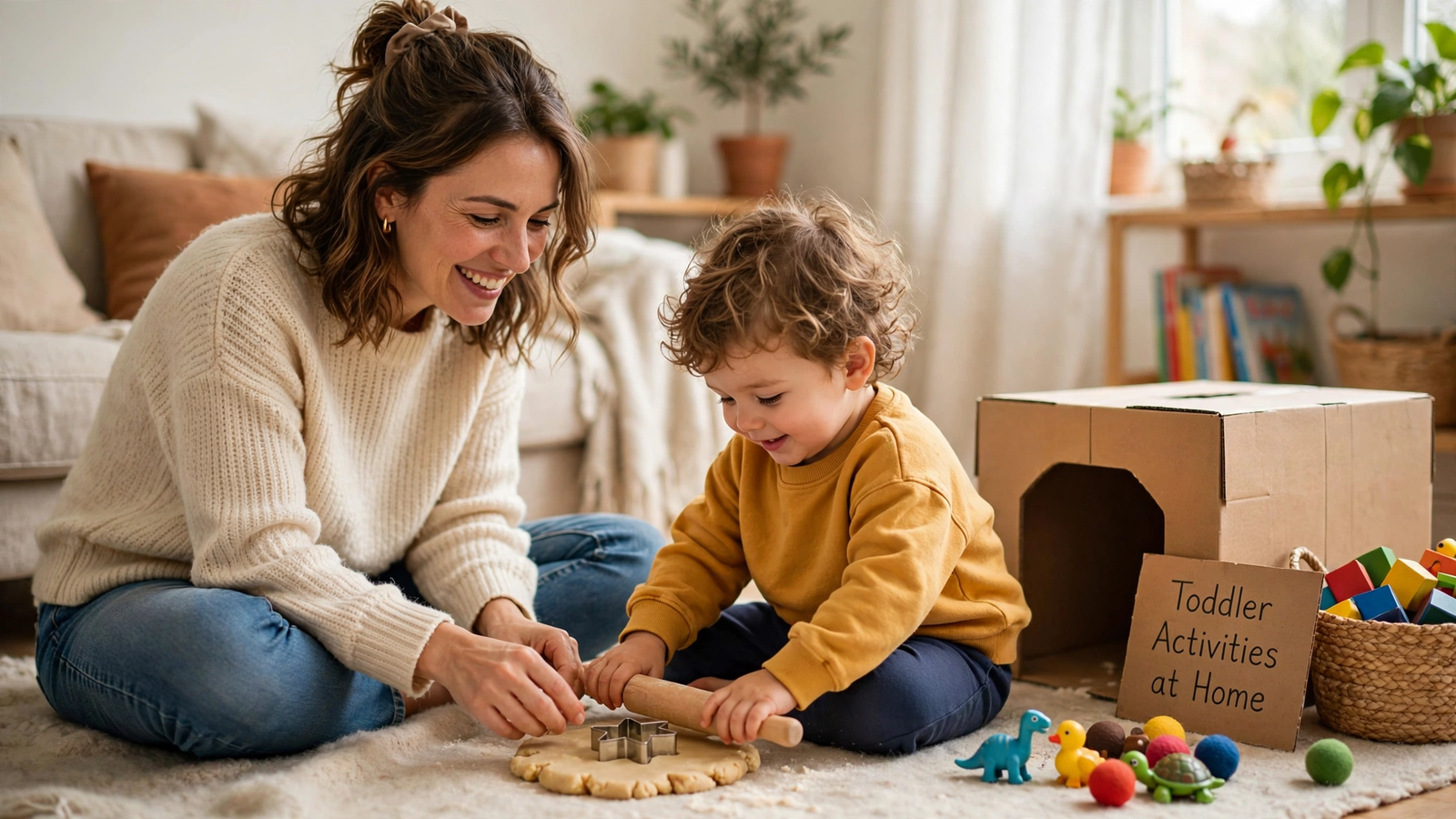
The best toddler activities at home use cheap household items such as cardboard boxes, flour dough, dry rice, painter’s tape, and water to build motor, language, and sensory skills. Match each activity to your child’s age, keep sessions short, supervise closely, and remove any object small enough to swallow. The child leads. You set up the space, keep it safe, and describe out loud what your child is doing, which turns plain play into vocabulary practice.
The best picks depend on your child’s stage, because a 13-month-old and a 34-month-old need very different challenges. Choose one sensory, one movement, and one quiet activity per day from your child’s age group.

Young toddlers learn by grabbing, dumping, and crawling. Keep materials large and mouth-safe.

By now, steps get steadier, and little hands grow nimbler. Activities can include simple rules.
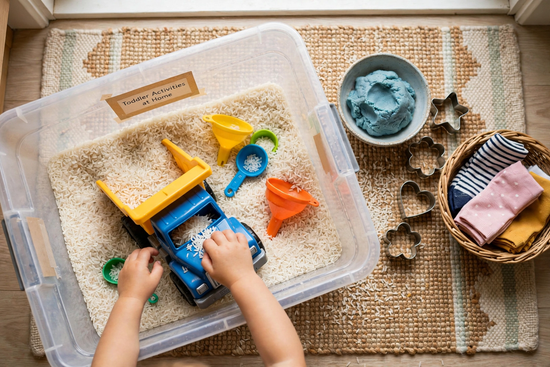
Bigger toddlers begin pretending and sorting. Hand them little tasks with an obvious end.
Older toddlers handle stickers, chunky stamps, and washable paint well, so craft supplies fit nicely into this age group. If you win a bundle in one of our [Look What Mom Found giveaways], this is the place to use it.
How Much Do Low-Cost Toddler Activities Really Cost?
Most of these 15 ideas use things you already own, like boxes, pots, socks, and cushions. Play dough and the rice bin need a grocery run, and a few others use cheap extras such as painter’s tape, contact paper, or a pool noodle.
| Activity | Main supply | Cost basis | Source |
| Play dough | All-purpose flour | $0.544 per pound, June 2026 U.S. average | U.S. Bureau of Labor Statistics |
| Rice sensory bin | White long-grain rice | $1.089 per pound, June 2026 U.S. average | U.S. Bureau of Labor Statistics |
| Box tunnel | Shipping box | Free if reused | Household item |
| Kitchen band | Pots and spoons | Free if owned | Household item |
| Water painting | Brush and water | Free if owned | Household item |
Two cups of all-purpose flour weigh about 0.53 pounds, so one dough batch uses roughly 29 cents of flour. Salt and oil from the pantry add only a few cents more.
A 3-pound rice bin costs about $3.27 and lasts for months in a sealed tub. Make dough twice and buy rice once, and your month of supply-based play totals about $3.85.

Clear a floor area, block stairs and outlets, and check every loose object for size before play begins. Constant supervision protects a toddler better than any product.
Federal rules treat anything that fits fully inside a test cylinder 1.25 inches wide and 2.25 inches long as a small part, according to the U.S. Consumer Product Safety Commission. A toilet-paper tube is a bit wider than that cylinder, which makes it a cautious home check: if an item slides through, store it away.
Test bottle caps, coins, dried beans, button batteries, and pieces from older siblings’ toys. Repeat the check every session, because toys crack and new items drift in.
Many parents put every toy out at once. The child dumps, flits, and loses interest fast because too many choices split attention.
Divide supplies into three labeled bins, keep one bin out per week, and swap on the same day each week. If you want to make the bins yourself from jars, fabric, or boxes you already own, our [Inventive LWMFCrafts storage ideas] show how on a small budget. Familiar items feel new again, and cleanup takes minutes.
Hands-on play offers toddlers genuine talk, touch, and movement that screens simply can’t. Common Sense Media’s 2025 census found kids under 2 spent an average of 1 hour and 3 minutes on screens daily.
Replace half of that with one sensory bin and one movement game, and your child gains about 30 minutes of active play daily. Over a week, that’s roughly 3.5 hours of extra hands-on learning.

Give your toddler a small, real job and call it a game. Once you see how to make playful activities from daily chores, you skip set-up entirely.
Let your child stir pancake batter with one spoon. Count socks aloud as they go into the washer. Hand over a damp cloth to wipe a low table, which trains the same arm control as painting and gives a proud sense of helping.
A key exception: children who still put everything in their mouths, or who have a diagnosed swallowing or sensory-processing condition, need different materials. Swap dry rice for large cooked pasta, replace salt dough with a taste-safe dough made from heat-treated flour or with mashed banana or yogurt for finger play, and skip sticky textures that cause distress. A pediatric occupational therapist can adjust activities when standard sensory play overwhelms a child.
Rotate short blocks of sensory play, movement, quiet play, and chores through the day. Ten to fifteen minutes per block suits most toddlers. Add outdoor time and snacks between blocks to reset energy.
For most children under 18 months, pediatric guidance says to avoid screens except video calls. The American Academy of Pediatrics sets a ceiling of one hour per day of high-quality programming for ages 2 to 5. Watch together when possible and talk about what you see.
Yes, if you supervise closely and use mouth-safe fillers. Large cooked pasta, oat cereal, or plain water work better than dry rice or beans for children who still mouth objects. Stay within arm’s reach the entire time.
Expect short bursts, often under ten minutes. Focus lasts longer when the child picks the activity and an adult joins in. Stop before boredom hits so the activity stays exciting next time.
No, everyday stuff meets almost every developmental need. Boxes, tubs, socks, pots, and tape all encourage moving, sorting, music, and make-believe. Spend money only on durable basics like balls and chunky crayons.
The best toddler activities at home cost almost nothing and rely on boxes, flour, water, and an adult who plays along. Match ideas to your child’s age, rotate supplies weekly, and test every loose item for choking risk. Short, simple play repeated daily builds the movement, language, and thinking skills toddlers need most.