 11
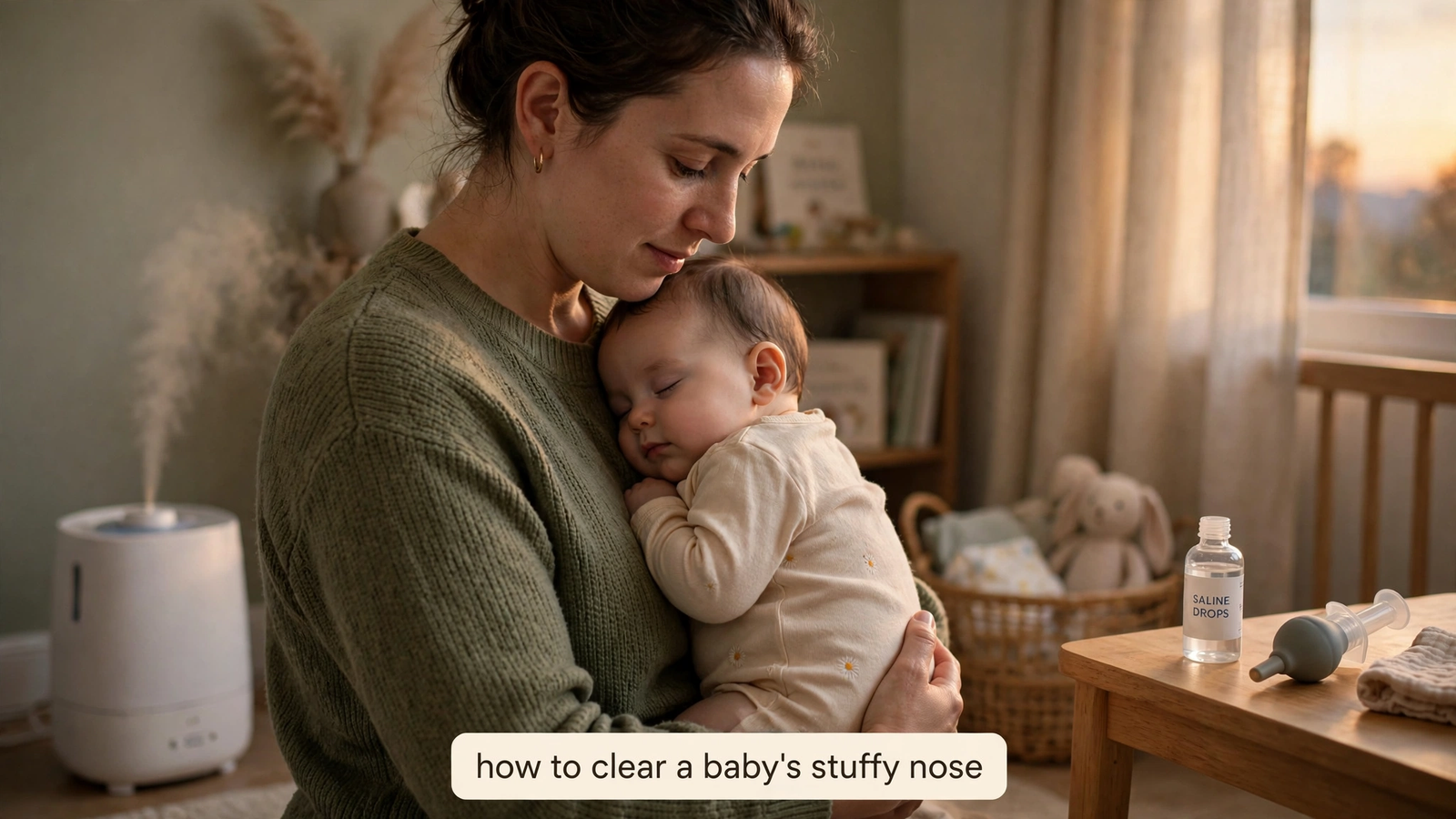
Learning how to clear a baby’s stuffy nose without medicine comes down to saline drops and gentle suction with a bulb syringe or nasal aspirator before feeds and sleep. A cool-mist humidifier and steady fluids keep mucus thin between sessions, and your baby should still sleep flat on their back.
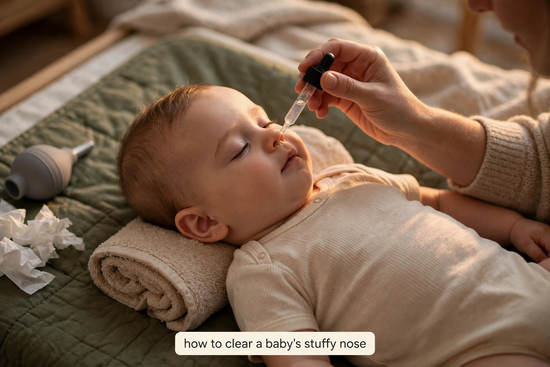
Thin the mucus with saline, wait about a minute, and then suction one nostril at a time. Keep plain saline drops with no added medicine, a bulb syringe or aspirator, and tissues within reach.
Choose drops over sprays for babies. Drops let you control every bit of fluid entering a tiny nostril.
Aspirators and saline kits show up regularly as prizes in look what mom found giveaways. Before using one, confirm every part comes apart for washing.
| Method or measure | Why it helps | Key figure | Source |
| Saline drops | Loosen dried, sticky mucus | 2 drops in each nostril | American Academy of Pediatrics, HealthyChildren.org |
| Timing | Opens the nose when your baby needs it most | About 15 minutes before a feed or nap | American Academy of Pediatrics, HealthyChildren.org |
| Bulb suction | Pulls out loosened mucus | No more than 3 times a day | KidsHealth (Nemours) |
| Cool-mist humidifier | Keeps mucus from crusting overnight | Indoor humidity between 30% and 50% | U.S. Environmental Protection Agency |
| Symptom timeline | Shows when a cold is lasting too long | Cold symptoms usually last 10 to 14 days | American Academy of Pediatrics, HealthyChildren.org |
| Fever check | Flags infections that need an exam | Rectal temperature of 100.4°F or higher at 3 months or younger: call right away | American Academy of Pediatrics, HealthyChildren.org |
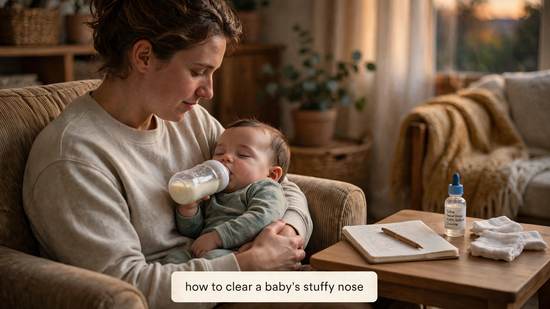
Only a few times a day, saved for moments when congestion blocks feeding or sleep. Repeated suction swells the delicate nasal lining.
That cap matters because colds keep coming: the American Academy of Pediatrics reports that a typical child gets 8 to 10 colds before turning 2. Spread across 24 months, that equals a fresh cold every 10 to 13 weeks, so your suction habits repeat often.
Picture a 6-week-old who feeds eight times in 24 hours. With three suction sessions allowed, five feeds get no bulb at all.
Spend them where a blocked nose costs the most: the last feed before bedtime, the first overnight feed, and whichever daytime feed your baby usually refuses. Before the other five, use saline alone; the drops often loosen enough mucus for a sneeze to finish the job.
Many parents suction after a feed, when snorting sounds loudest. That noise often comes from pooled milk, and a bulb then provokes gagging and spit-up. Suction before the breast or bottle instead, then keep your baby upright through a burp break.
Most babies cry during suction, and crying pushes tears into the nose. Knowing how to soothe a crying baby right afterward protects your work: hold them upright against your chest, sway slowly, and start the feed.
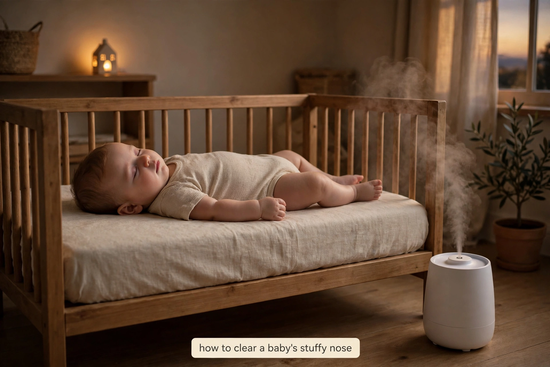
Run a cool-mist humidifier, suction before bed, and place your baby flat on their back in a bare crib. Never tilt the mattress or let a sick baby sleep in a car seat or swing, since those positions narrow the airway.
Heated winter air dries mucus into crusts, which is why the nose sounds worst at 2 a.m. Refill the humidifier daily with distilled water, since stagnant tanks breed mold. A unit from a give away look whatmomfound entry needs the same daily rinse as a store-bought one.
A steamy bathroom works as a quick backup: run a hot shower with the door closed and sit in the mist with your baby, away from the water, for a few minutes.
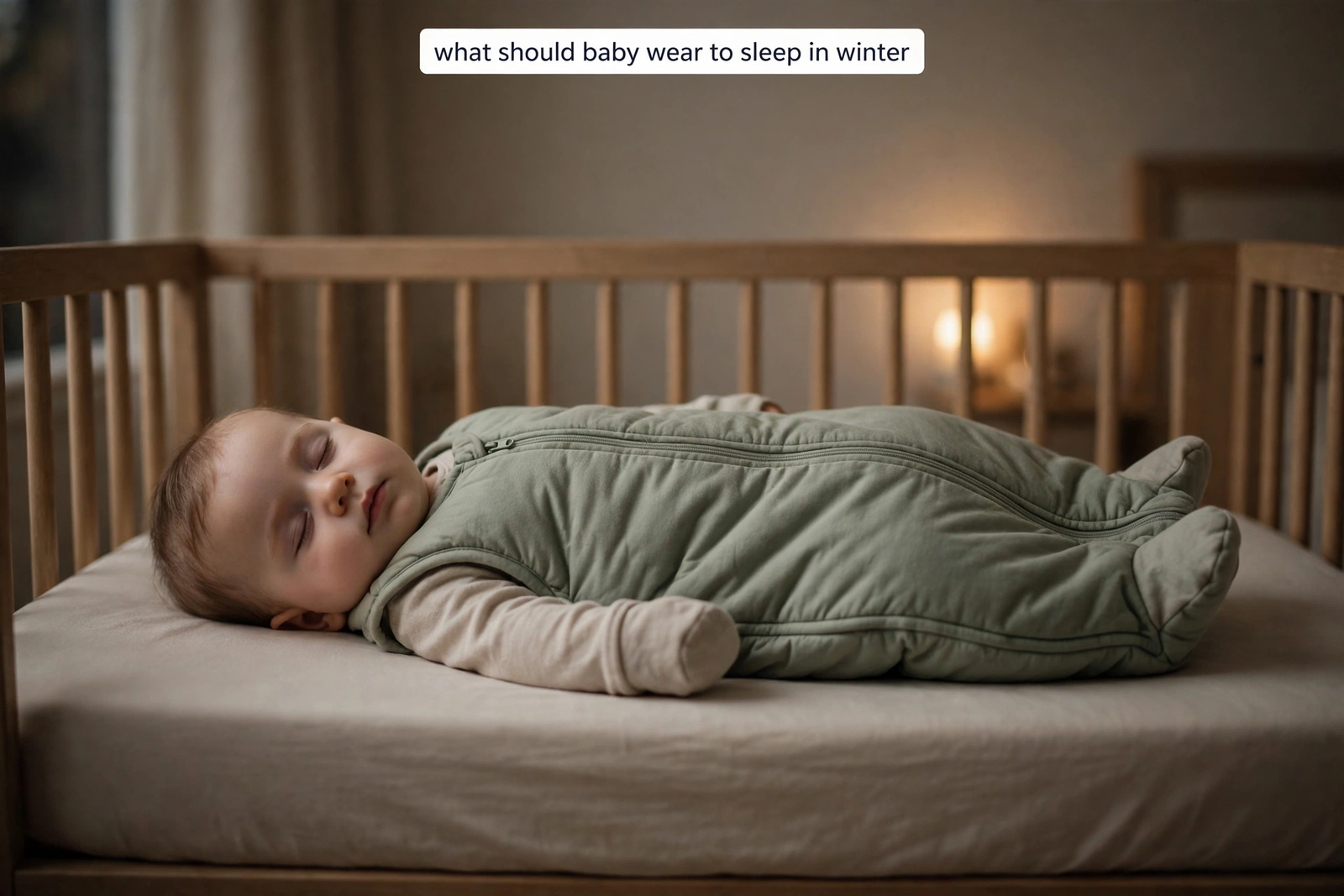
Parents who wonder what should baby wear to sleep in winter during a cold get the usual answer: a snug sleeper plus a wearable blanket, with no loose blankets or hats.
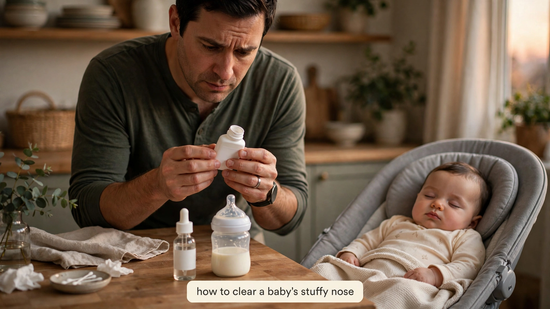
No. Decongestants, antihistamines, and cough-and-cold syrups are unsafe for babies, and menthol rubs irritate a young airway.
The U.S. Food and Drug Administration warns against giving any cough or cold product containing a decongestant or antihistamine to children under 2, after reports of seizures, racing heartbeats, and deaths. Manufacturers also relabeled children’s versions to rule out use before age 4. In practice, nearly the entire cold-and-flu shelf is off-limits until your child’s fourth birthday, leaving saline, suction, humidity, and fluids as your working toolkit.
Fluids count as treatment. Offer breast milk or formula in shorter, more frequent sessions, and skip plain water for babies under 6 months. Parenting deal sites such as lookwhatmomfound often list plug-in vaporizers and “natural” sprays; check labels for menthol, camphor, or eucalyptus first.
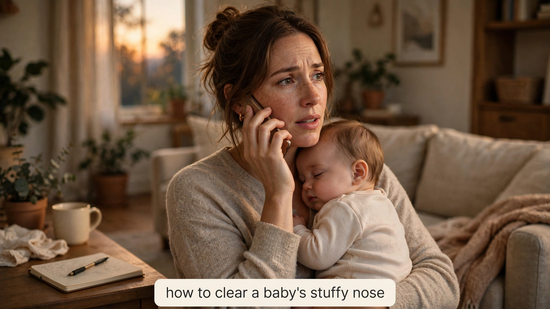
Call the same day if congestion comes with labored breathing, poor feeding, or signs of dehydration. Call 911 for blue or gray lips, pauses in breathing, or a baby who is hard to wake.
Watch for these same-day warning signs:
RSV causes many serious infant chest infections. A 2025 report in the CDC’s Morbidity and Mortality Weekly Report found RSV hospitalization rates for infants up to 2 months old ran about 45% to 52% lower during the 2024–2025 peak months than in pre-pandemic seasons, after a maternal vaccine and the antibody nirsevimab became widely available. If your baby is under 8 months as RSV season starts and lacks protection, ask about the antibody at the next visit; it prevents illness rather than treating it.
Many baby’s first Christmas ideas revolve around crowded gatherings, so ask guests with sniffles to stay home.
One exception: newborns in their first week or two often sound stuffy without being sick. If your baby feeds well, has no fever, and breathes calmly, skip suction. The opposite case is a toddler with thick, foul-smelling drainage from just one nostril; that pattern points to a lodged bead or bit of food, so skip the bulb and book a pediatric visit.
Saline is the better choice because it is sterile and made to thin mucus. Milk left in the nose turns sticky and feeds bacteria.
Both work, but a mouth-powered aspirator gives you finer control over suction strength. Bulbs trap water inside, so replace them every few months.
It is rare, because most babies open their mouths to breathe once the nose blocks. Very young infants switch less easily, so watch for feeding trouble or labored breathing.
No, teething does not cause nasal congestion. Congestion during teething usually means a cold arrived at the same time.
No, a baby who is sleeping soundly is breathing well enough to rest. Save suction for the next feed.
Knowing how to clear a baby’s stuffy nose without medicine takes three simple tools: saline, gentle suction timed before feeds, and moist air at night. Use them sparingly, keep your baby flat on their back for sleep, and treat fast breathing or poor feeding as a reason to call, not to wait.