
 11
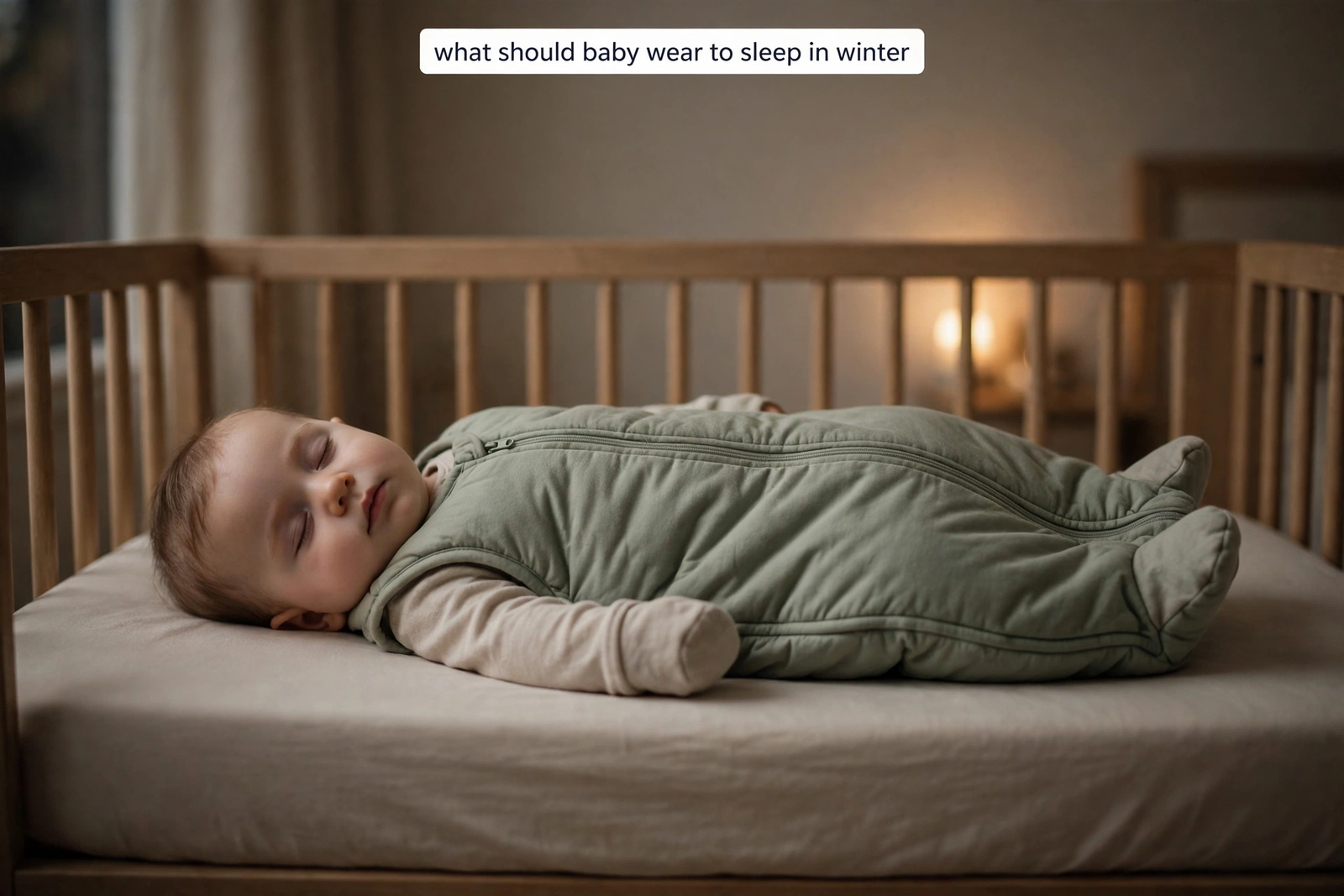
The answer to what should baby wear to sleep in winter: a snug cotton sleeper under a wearable blanket matched to the nursery temperature, with no loose blankets, hats, or weighted products. Add one layer more than you would wear, then check the nape for sweat.
A wearable blanket, usually sold as a sleep sack, is a sleeveless zip-up bag that goes over pajamas and replaces loose crib blankets, staying in place no matter how hard a baby kicks.
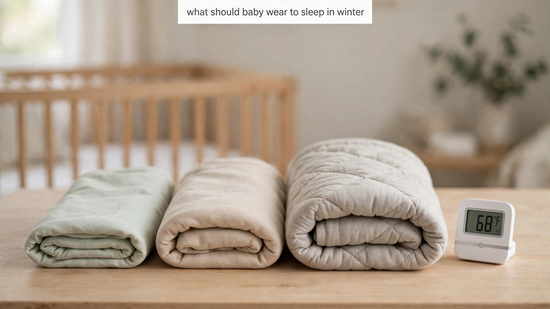
Use two layers chosen by the thermometer: breathable pajamas against the skin and a sleep sack rated for the nursery’s real temperature.
Sack labels list warmth in TOG, short for thermal overall grade. Higher numbers mean more insulation.
Place a digital thermometer at crib height, away from vents and windows.
| Nursery temperature | Sack warmth (TOG) | What goes underneath | Source |
| 72°F to 75°F | 1.0 | Short-sleeve bodysuit or thin footed pajamas | HALO Sleep TOG chart |
| 68°F to 72°F | 1.5 | Long-sleeve cotton footed sleeper | HALO Sleep TOG chart |
| 64°F to 68°F | 2.0 | Long-sleeve bodysuit under a footed sleeper | HALO Sleep TOG chart |
| 61°F to 64°F | 3.0 | Long-sleeve bodysuit under a footed sleeper | HALO Sleep TOG chart |
| Below 61°F | No HALO rating listed | Raise the heat or move the crib to a warmer room | — |
HALO publishes overlapping ranges—its Help Center lists 0.5–1.0 TOG for 68–77°F, 1.5 TOG for 64–75°F, and 2.0–3.0 TOG for 60–72°F—so treat any band as a starting point and confirm with the nape check.
Fabric matters too. Cotton, bamboo viscose, and merino wool pull moisture off the skin, while polyester fleece holds it in, so a fleece sleeper inside a fleece sack is the textbook over-bundled outfit.
Keep playful activities to daylight hours. Dry hair fully before zipping the sack, since damp hair loses heat by evaporation in a cool room.
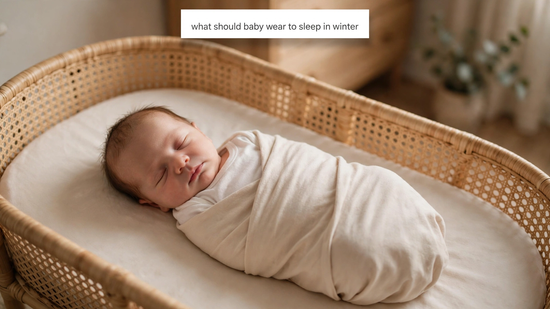
Newborns sleep best in a snug cotton swaddle over a bodysuit, while babies who have started to roll need an arms-out sleep sack. The pajama layer underneath follows the same room-temperature logic at every age.
A swaddle counts as a layer, so a swaddled newborn in a 70°F room needs only a short- or long-sleeve bodysuit beneath it. Once the arms come out, bare arms lose heat faster, which is why many parents move from a short-sleeve bodysuit to a long-sleeve sleeper during the transition week.
Sizing matters as much as warmth. Choose the sack by the weight range on the label, and check that the armholes and neckline sit close to the body so the fabric cannot bunch up over the chin.
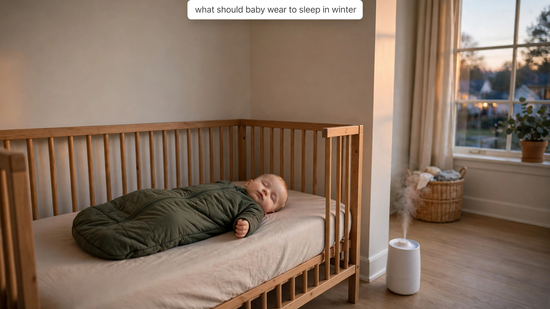
Place the crib against an interior wall, away from windows, radiators, and heaters. Exterior walls and glass pull heat out of the air around a baby, and blind cords near a crib create a strangulation hazard.
Space heaters belong outside the baby’s reach, on a hard floor, with automatic tip-over shutoff, and plugged straight into the wall rather than into an extension cord. Keep anything that can burn at least three feet away, never drape clothes or a sack over a heater to warm it before bedtime, and turn the heater off when you go to sleep.
Furnace air dries out nasal passages, so a cool-mist humidifier helps a congested baby breathe through the night. Skip warm-mist models, which carry a burn risk, and empty and dry the tank every day, with a full clean every third day, to stop mold and bacteria growth.
Loose blankets can cover a baby’s nose and mouth, and heavy bundling traps heat that an infant cannot shed. Cold nights tempt parents toward both.
A CDC report released in September 2026 puts the yearly U.S. toll of sudden unexpected infant deaths near 3,400. In the same report, which analyzed 4,861 deaths from 2020–2024 in 31 case-registry jurisdictions (about 40% of U.S. cases), 919 deaths were classified as explained suffocation with unsafe sleep factors, and soft bedding was involved in 74% of those (681 deaths).
That is roughly nine families a day nationally, and soft bedding was involved in 681 of the registry deaths over those five years—deaths in which a bare crib removes the hazard. Strip the crib to a firm mattress and a fitted sheet, and leave out quilts, bumpers, sheepskins, and plush toys however cold the house gets.
Jewelry falls under the same bare-crib rule. Among popular baby teething remedies, amber necklaces and teething bracelets should not be used at all: the FDA warned in December 2018 that teething jewelry has caused deaths and serious injuries from strangulation and choking, and the AAP says infants should not wear any jewelry. As a practical rule, a chilled teether handed over at bedtime should leave the crib once the baby dozes, since teethers need supervision and the crib should stay bare.
Teething drool also soaks the neckline and chills the skin in a cool nursery. Swap in a dry bodysuit before zipping the sack again, and skip bibs during sleep, since the ties and snaps sit right at the throat.
Overheating is the quieter hazard. An adult kicks off a blanket when too warm; a bundled baby cannot.
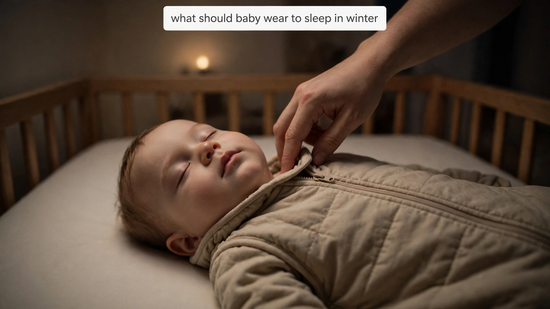
Feel the back of the neck or the chest. Warm and dry is right, sweaty means remove a layer, and cool skin there means add one.
Hands and feet make poor gauges, since healthy babies route blood toward the core.
Signs of a baby who is too cold include a cool chest or back, frequent restless waking, and pale, blotchy skin on the trunk. Bluish lips or a limp, unusually sleepy baby in a cold room call for emergency care right away—call 911 or go to the emergency department—while you warm the baby against your skin.
A two-minute overnight check works like this:
Parents searching how to soothe a crying baby at 2 a.m. often skip this step. A baby who wakes sweaty or chilled rarely settles with rocking alone, and fixing the layer removes the reason for waking.
The setback mistake happens when parents dress a baby for the bedtime temperature and a programmed thermostat then drops the house several degrees overnight.
Picture a nursery at 72°F at 7:30 p.m., with a schedule that cools the house to 64°F from 11 p.m. to 6 a.m. The baby goes down in a light sack over a short-sleeve bodysuit, a correct outfit for 72°F. By 2 a.m. that outfit sits below its range—8 degrees below the bottom of the 72–75°F band in the table above and 4 degrees below the bottom of HALO’s broader 1.0 TOG range of 68–75°F—and the baby spends 7 hours of an 11-hour night, about 64%, underdressed.
Two fixes work. Raise the overnight setpoint to 68°F, the bottom of HALO’s 1.0 TOG range, or dress for 64°F from the start with a long-sleeve bodysuit, a footed sleeper, and a 2.0–3.0 TOG sack, then run the nape check at your own bedtime.
Hats and weighted sacks do not belong in the crib, and swaddling stays safe only until a baby starts trying to roll. Switch to an arms-out sack that same week.
Babies release heat through the head, and knit caps or hoods can slide down over the eyes and nose.
In a June 15, 2023 letter to the chair of the Consumer Product Safety Commission and the chair of ASTM International’s F15 committee, the American Academy of Pediatrics opposed even a voluntary safety standard for weighted infant sleep products, warning that weight on the chest may compress an infant’s flexible ribcage and that anything that impairs arousal may increase SIDS risk. Skip them entirely; a standard sack at the right TOG keeps a baby just as warm without pressing on the ribs.
Weighted products still reach families as gifts or prizes, so before accepting any sleep sack for overnight use—including one won through social media contests or look what mom found giveaways— read the product description for words like “weighted,” “gently weighted,” or “beads.”
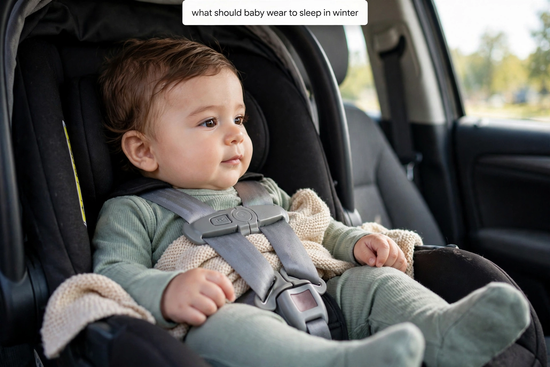
Buckle babies into car seats in thin, snug layers, never in a puffy coat or snowsuit, then lay a blanket over the fastened harness. A bulky coat compresses in a crash and leaves the straps too loose to hold the baby in place.
When a baby falls asleep in a snowsuit, in a car seat, or on a parent’s chest, move the baby to the crib on their back as soon as possible, then remove the outdoor layers. A car seat is not a safe overnight sleep spot, whether or not it is clicked into a vehicle or stroller base.
Stroller naps outdoors need a wind cover, and a nap check every 15 to 20 minutes. Heat builds fast under a fully closed rain shield or a blanket draped over the canopy, so leave airflow on at least one side.
Most babies need two or three sleep sacks and four to six footed sleepers per size. Some of that gear arrives free.
If you’re working out how to get free baby stuff, start with the safe-sleep programs that some hospitals and county health departments run for qualifying families. Registry welcome boxes, manufacturer sample offers, and local parent swap groups fill most of the remaining gaps.
Before the first night, confirm any free or secondhand sack has no weights or hood, a neck opening that stays below the chin, and no listing in the federal recall database.
Spend where it changes nightly comfort. One warmer sack for the coldest weeks and one lighter sack for heated nights covers most U.S. winters, and a two-way zipper that opens from the bottom makes 3 a.m. diaper changes possible without unzipping the whole chest.
Hand-me-down sleepers work well if the snaps close firmly and the feet carry no loose threads. Long threads inside a footed sleeper can wrap around a toe and cut off circulation, so turn the feet inside out and trim them before use.
Skip the extra layer when a baby has a fever, and follow NICU discharge instructions over any chart for a premature baby. Bundling a feverish infant traps heat and pushes the temperature higher, so use one light layer and call the pediatrician right away about any rectal temperature of 100.4°F or higher in a baby younger than three months, even if the baby otherwise seems well. During a winter power outage, move the crib or bassinet into the warmest room instead of adding blankets.
No, take hats off before any indoor sleep. A cap can slip over the face and blocks one of the main routes a baby uses to release heat.
A fleece sleeper is fine by itself in a cool room but too warm under a heavy sack in a heated one. Pair fleece pajamas with a lighter sack, or pair cotton pajamas with a warmer one, and confirm the choice with the nape check.
Aim for a room that feels comfortable to an adult in light clothing, then dress the baby for the thermometer reading. Steady matters more than a perfect number, so limit big overnight drops.
Socks are fine under footless pajamas, but footed sleepers make them unnecessary. As a practical tip, skip loose mittens at night — they can slip off into the sleep space — and trim the nails short instead of covering the hands.
Wait until after the first birthday before adding any loose blanket. Until then, a sleep sack sized for the baby’s weight provides the same warmth with nothing that can ride over the nose and mouth.
What should baby wear to sleep in winter comes down to two layers picked by the thermometer: breathable pajamas and a sleep sack rated for the room. Keep the crib bare, judge warmth at the nape instead of the hands, and dress for the coldest hour of the night rather than the warmest.
One thought on “What Should Baby Wear to Sleep in Winter? A Parent’s Guide ”